

You may need a permit in Las Vegas if you add space, open walls, or change plumbing, electrical, gas, or air conditioning. You usually do not need one for painting, flooring, cabinets, countertops, or like for like fixture swaps.
Rules differ by city, and a guide cannot replace a call to your building department. This guide uses the City of Las Vegas homeowner guide and the Clark County building code. Use it to know what to expect before you hire anyone.
A Simple Test: When Do You Need a Permit?
The City of Las Vegas gives four simple rules. You likely need a permit when you:
- Add to a building or build a new structure
- Open up interior or exterior walls
- Work on plumbing, electrical, or mechanical systems beyond routine maintenance
- Turn an existing room, garage, or patio into something new
If any of these fit your project, call your building department before you start.
Who Issues Your Permit? City or County
A Las Vegas mailing address does not always mean the City of Las Vegas. Many addresses sit in unincorporated Clark County. Your permit comes from the office that covers your property.
| Where your home is | Who issues the permit |
|---|---|
| City of Las Vegas | City of Las Vegas Building and Safety |
| Paradise, Spring Valley, Enterprise, Sunrise Manor, Winchester, Whitney | Clark County Building and Fire Prevention |
| Henderson | City of Henderson Building and Fire Safety |
| North Las Vegas | City of North Las Vegas Building Safety |
| Boulder City | The Boulder City building department |
Not sure which office covers you? Look up your parcel on the Clark County Assessor website, or call the City of Las Vegas Building and Safety Division at 702-229-6251. We can also confirm it for you when you call.
Home Projects That Usually Need a Permit
This list follows the City of Las Vegas homeowner guide. Other cities use similar rules.
- Adding a room, or turning a garage, attic, or basement into living space
- Moving, removing, or adding walls
- Cutting a new window or door opening
- Building or enclosing a patio
- Building a deck more than 30 inches above grade
- Building a block wall or retaining wall more than 30 inches high
- Installing tile roofing, or replacing more than 64 square feet of roof sheathing
- Adding or changing wiring, outlets, or the main electrical panel
- Installing a solar system
- Replacing a water heater or water softener
- Changing piping inside walls, ceilings, or floors
- Running or changing gas lines, such as a BBQ line, fire pit, or pool heater
- Installing or changing any part of a heating or cooling system
- Installing bath fans, dryer vents, or range hood exhausts that vent outside
- Building a pool or in ground spa
Home Projects That Usually Do Not Need a Permit
- Painting and wallpaper
- Flooring and floor coverings
- Cabinets, countertops, and similar finish work
- Replacing a sink, toilet, or faucet in the same spot
- Replacing a door or window with the same size and type, with no framing changes
- Gutters and downspouts
- Fences up to 7 feet tall, except in the front setback or as a pool barrier
- Walls up to 30 inches high, and slabs or driveways up to 30 inches above grade
- Small stucco or drywall repairs under 32 square feet with no framing repair
- Replacing roof covering other than tile, with 64 square feet or less of sheathing replaced
- Replacing a disposal or dishwasher of 30 amps or less
- Portable spas and playground equipment
Clark County code lists the same finish work as exempt: painting, papering, floor coverings, cabinets, moldings, countertops, and similar work. An exemption never allows work that breaks the building code.
Permit Rules for Common Projects
| Project | Permit needed? | Why |
|---|---|---|
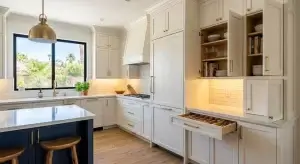
| Kitchen cabinets and countertops only | Usually no | Finish work is exempt |
| Kitchen remodel that moves the sink, gas line, or outlets | Yes | Plumbing, gas, and electrical work need permits |
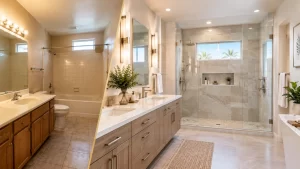
| Bathroom remodel with the same fixtures in the same spots | Usually no | Like for like swaps are exempt |
| Bathroom remodel that moves plumbing | Yes | Moving plumbing needs a permit |
| New flooring or paint | No | Finish work is exempt |
| Water heater replacement | Yes | Water heaters need a permit |
| Air conditioner replacement | Yes | Any change to a cooling system needs one |
| Room addition or garage conversion | Yes | New or changed living space |
| Patio cover or enclosed patio | Yes | Building a patio needs a permit |
| Block wall over 30 inches | Yes | Taller walls need a permit |
| Solar panels | Yes | Solar systems need a permit |
| Fence up to 7 feet | Usually no | Exempt, with exceptions |
| Shingle roof, no structural repair | Usually no | Exempt up to 64 square feet of sheathing |
Easy Mistakes That Trigger a Permit
Moving the sink. Swapping a sink in the same spot is fine. Moving it means new piping, and that needs a permit.
Adding outlets. Replacing an outlet like for like is exempt. Adding one, or adding a required GFCI outlet, needs a permit.
Venting a fan or range hood. Installing vented bath fans and range hood exhausts is listed as permit work.
Changing what a room is for. Turning a garage into a bedroom is a conversion. It needs a permit, plus proper exits and ventilation.
What Happens If You Skip a Required Permit?
Skipping a permit can cost far more than the permit itself.
- You may get a stop work order and investigation fees.
- Inspectors may require engineering reports, testing, and opening finished walls.
- Your insurance company may not cover problems caused by unpermitted work.
- Nevada sellers must disclose known defects, and unpermitted work counts.
- Appraisers often cannot count unpermitted square footage, which can hurt a sale.
- You can usually permit the work after the fact, but fees are higher.
Who Pulls the Permit?
A licensed contractor normally pulls the permit and schedules the inspections. Your contract should say who does it. Be careful with anyone who says you do not need a permit when you do.
Nevada lets a homeowner build or improve their own home for their own use without a contractor license. If you sell or lease the property within one year of finishing, the state may question that exemption. Check any contractor license with the Nevada State Contractors Board before you sign.
How to Get a Permit in Las Vegas
- Confirm which office covers your address.
- Ask that office whether your project needs a permit.
- Prepare drawings if the office requires them.
- Submit your application through the online permit portal for your city or the county.
- Pay the plan review and permit fees.
- Post the permit on site and schedule each inspection.
HOA approval is separate from a building permit. Get both before you start. Permit fees depend on project value and location, and new homes and additions also carry impact fees. To budget for them, use our home construction cost calculator.
Projects We Permit and Build
Seven Wells Construction handles permits on every project that needs one. See our kitchen remodeling, bathroom renovation, home addition, and ADU construction services. Planning a cabinet swap? Read our kitchen cabinet cost guide.
Frequently Asked Questions
Do I need a permit to replace kitchen cabinets in Las Vegas?
Not for cabinets alone. The City of Las Vegas and Clark County both list cabinets and countertops as exempt finish work. You do need permits if you move plumbing, gas lines, or electrical.
Do I need a permit to remodel a bathroom in Las Vegas?
Not if you replace fixtures in the same spots and touch no concealed piping. You do need a permit when you move plumbing, add a bathroom, or change electrical.
Do I need a permit to replace a water heater in Las Vegas?
Yes. The City of Las Vegas lists installing or replacing a water heater as work that needs a permit.
Do I need a permit for a fence or block wall in Las Vegas?
Wood or iron fences up to 7 feet usually do not, with exceptions in the front setback and around pools. Block walls and retaining walls over 30 inches do need a permit.
Do I need a permit to replace flooring or paint in Las Vegas?
No. Painting, wallpaper, and floor coverings are exempt finish work.
How do I know if I am in the City of Las Vegas or Clark County?
Your mailing address is not enough. Many Las Vegas addresses are in unincorporated Clark County. Check your parcel on the county assessor website, or call the City of Las Vegas Building and Safety Division at 702-229-6251.
This guide is general information, not legal advice. Rules change and differ by city. Confirm with your building department before you start. Sources: City of Las Vegas, When Do I Need a Permit and Clark County Building Administrative Code. Updated October 2026.
Not sure if your project needs a permit? Call (702) 420-2836. We will tell you what to expect and handle the paperwork.