
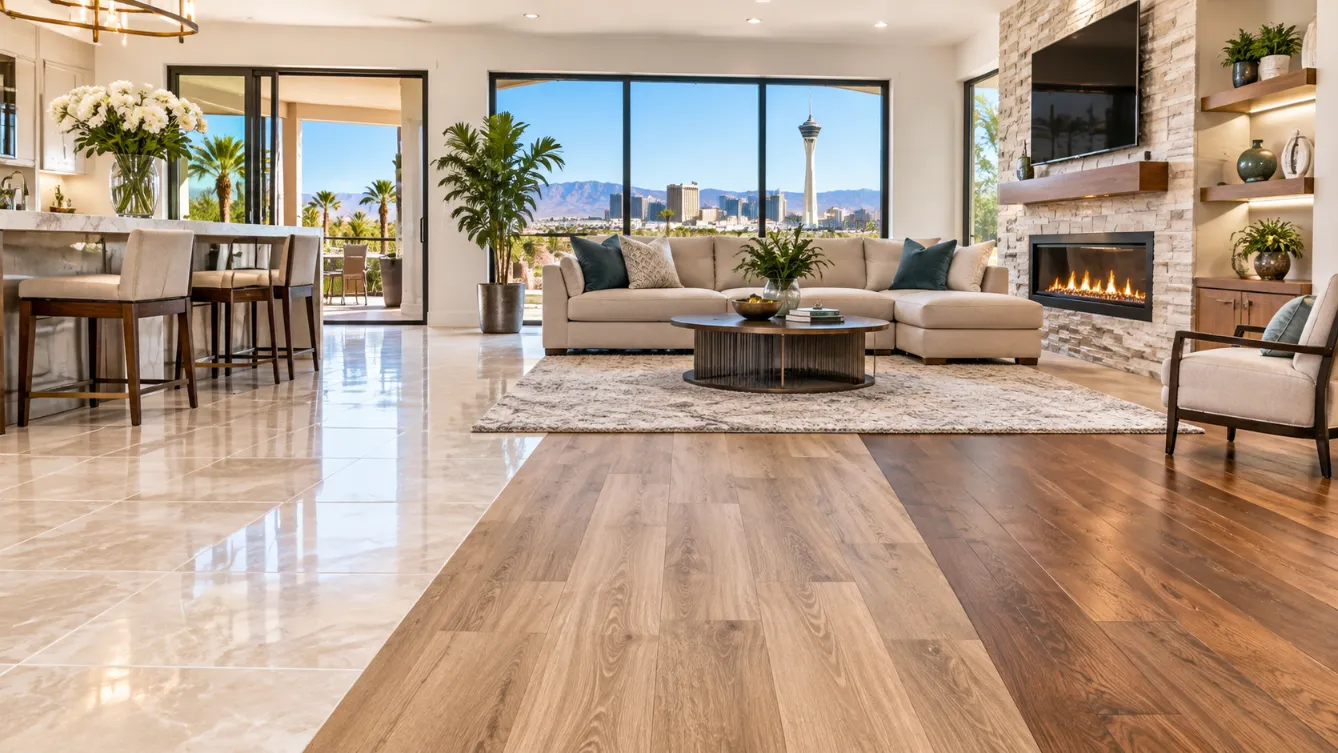
The best flooring for most Las Vegas homes is porcelain tile or rigid core luxury vinyl plank. Both handle desert heat, dry air, and sand without gaps or warping. Engineered hardwood can work in the right rooms if it is installed correctly.
That short answer hides a lot of detail. Las Vegas has very dry air, extreme summer heat, very hard water, dust, and concrete slab floors. Each one changes how a floor performs.
This guide explains how the desert affects each material, what each option costs in 2026, and which floor fits which room. You will know what to ask before you buy anything.
Planning new floors? Call (702) 420-2836 for a free in home estimate anywhere in the Las Vegas Valley.
How the Las Vegas Desert Affects Your Floors
Floors that work in humid states often fail here. Five local factors matter most.
Dry air. Wood shrinks when humidity drops. In Las Vegas that can mean gaps between boards and cracks in solid hardwood. Installers must acclimate wood to your home’s real indoor conditions before installation.
Heat and sun. Summer highs regularly top 110 degrees. Direct sun through large windows heats the floor right under it. Check the temperature limit for any vinyl product that sits in strong sun.
Dust and sand. Fine desert dust works like sandpaper on soft finishes. Homes in western Summerlin near Red Rock Canyon see more dust than most of the valley.
Hard water. The Las Vegas Valley Water District’s 2026 report puts valley water at 280 parts per million, or about 16 grains per gallon. Henderson reports 304 parts per million. That leaves mineral film on tile, grout, and any floor you mop often.
Concrete slabs. Most Las Vegas homes sit on a slab, not a crawlspace. Slabs can hold moisture and can crack. Both affect what goes on top.
Tile vs LVP vs Hardwood in Las Vegas
| Material | Desert Performance | Installed Cost in Las Vegas |
|---|---|---|
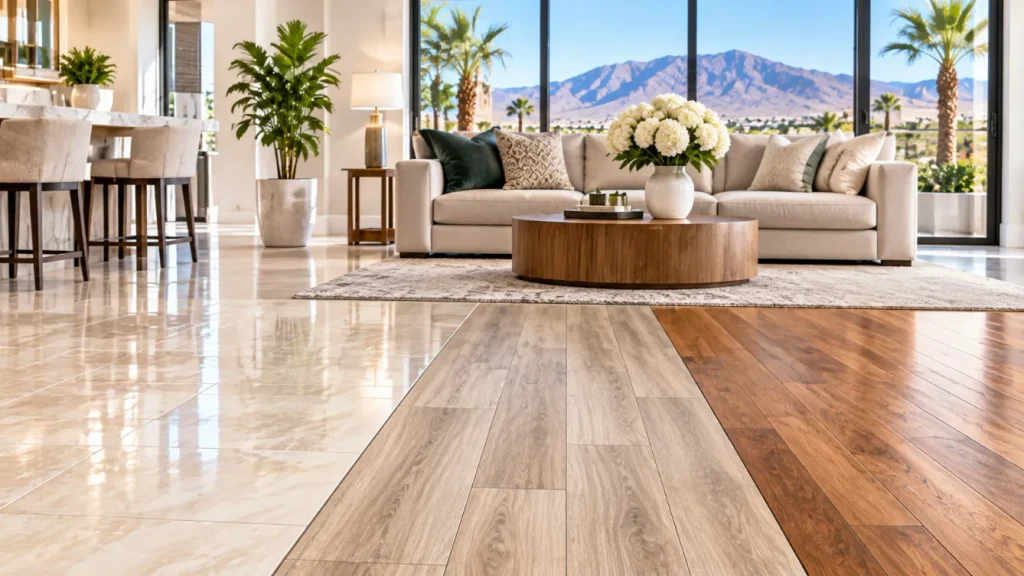
| Porcelain tile | Best. Barely moves with heat or humidity. | $5 to $15 per sq ft |
| LVP or SPC vinyl plank | Very good. Waterproof and dimensionally stable. | $4 to $8 per sq ft |
| Engineered hardwood | Workable with proper installation. | $7 to $13 per sq ft |
| Solid hardwood | Possible but high maintenance in dry air. | $8 to $16 per sq ft |
| Polished concrete | Excellent. Uses your existing slab. | $3 to $8 per sq ft |
Cost ranges come from Las Vegas flooring dealers and installers. Your quote depends on room size, layout, and subfloor condition.
Porcelain Tile
Porcelain is the most forgiving floor in the desert. It does not expand or contract much with heat or humidity, resists scratches from dust, and stays cool underfoot in summer.
The tradeoffs are cold feet in winter and a hard surface. Grout lines collect hard water minerals. Large format tile with fewer grout lines and epoxy grout makes cleaning easier.
LVP and SPC Vinyl Plank
Rigid core vinyl plank is the most popular choice for homeowners who want a wood look without wood problems. It is waterproof, resists scratches, and does not gap in dry air. Click lock products need no adhesive, so installation is usually faster and cheaper than tile.
Choose a rigid core product with a thick wear layer. Ask about the maximum temperature rating if the room has big west facing windows.
Engineered Hardwood
Engineered hardwood has a real wood top layer over a stable core. It handles dry air better than solid wood and works in living rooms, dining rooms, and bedrooms.
It still needs care. Acclimate the planks to your home’s indoor conditions before installing. Skipping that step is a common reason wood floors fail within months in the desert.
Solid Hardwood
Solid hardwood can work in Las Vegas, but it asks more of you. Expect seasonal gaps, careful humidity control, and regular maintenance. Keep it in climate controlled rooms and out of kitchens and baths.
Polished Concrete
If your home has a slab in good shape, polishing or staining it turns the slab into a finished floor. It is very durable, stays cool, and fits the desert look. It can show cracks, and it feels hard.
Best Flooring by Room in Las Vegas
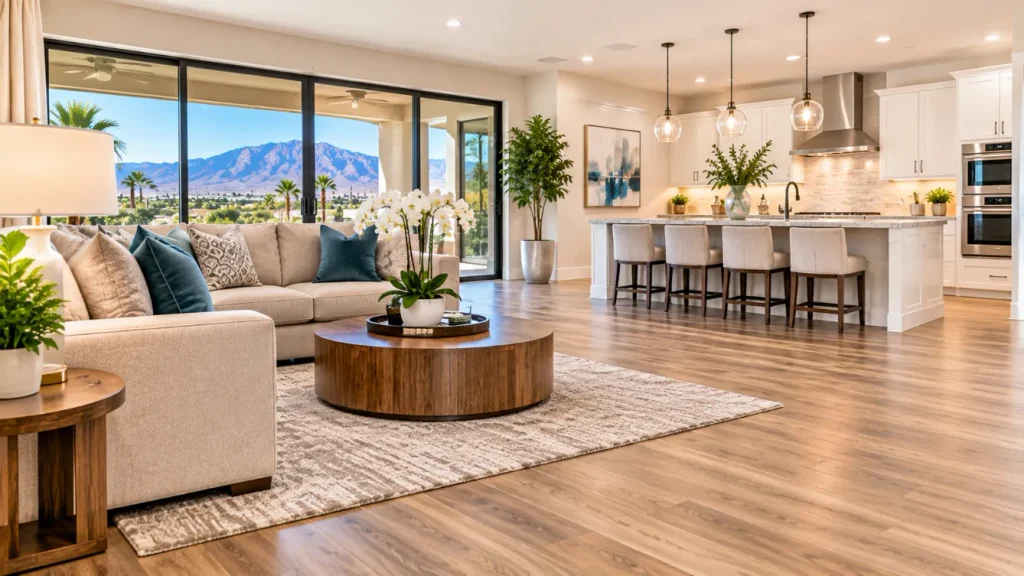
Living room and dining room. LVP or engineered hardwood for a warm look. Large format porcelain for the lowest maintenance.
Kitchen. Porcelain tile or LVP. Both handle spills and heavy traffic.
Bathrooms. Porcelain tile on floors and in showers. See our guide to a full bathroom remodel in Las Vegas for waterproofing and grout advice.
Bedrooms. Engineered hardwood, LVP, or carpet. Carpet still works where you want warmth and quiet.
Garage conversions and covered patios. Porcelain tile or sealed concrete. They tolerate heat and temperature swings best.
Condos and townhomes. Many HOAs require sound rated underlayment on upper floors. Check your CC&Rs before you buy.
How Much Does Flooring Installation Cost in Las Vegas in 2026?
Installed prices vary by material, but local installers report a similar pattern. LVP runs $4 to $8 per square foot. Porcelain tile runs $5 to $15. Engineered and solid hardwood run $7 to $16.
For a 1,500 square foot home, that math looks like this:
| Material | Estimated Total for 1,500 Sq Ft |
|---|---|
| LVP | $6,000 to $12,000 |
| Porcelain tile | $7,500 to $22,500 |
| Hardwood | $10,500 to $24,000 |
Prep work is where budgets slip. Removing old tile or hardwood and grinding the slab adds about $1.50 to $4.00 per square foot. Leveling low spots, moisture barriers, and crack repair add more.
Prices vary by home and scope. Free written quote on every project. Call (702) 420-2836
Slab Problems to Check Before You Install
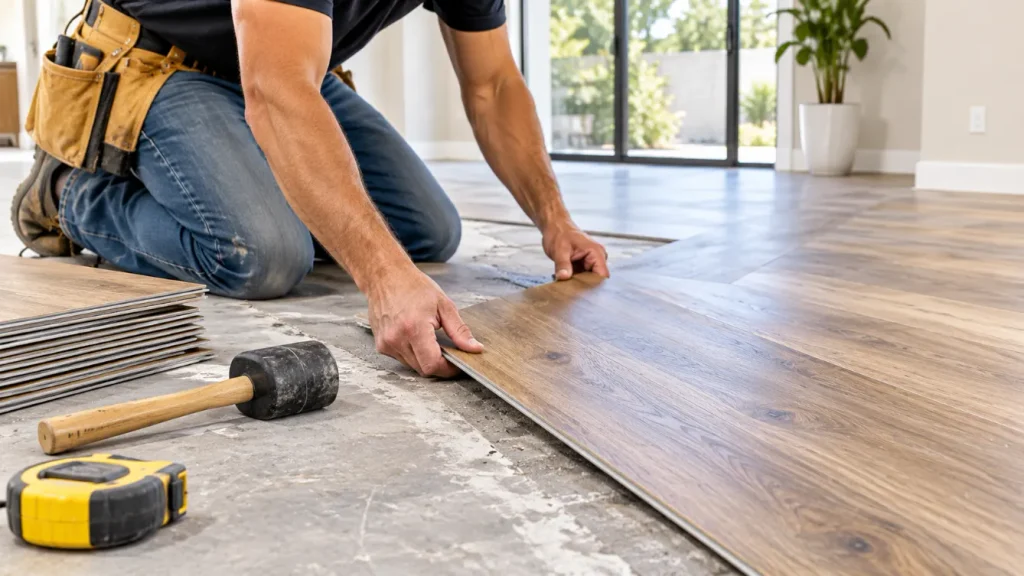
Moisture. Test the slab before installing any glue down product. Moisture under a floor causes failures that look like product defects.
Cracks. Concrete cracks over time. Tile over a cracked slab needs a crack isolation layer or it will crack too.
Level. Large format tile needs a flat surface. Slabs settle, so grinding and patching is normal.
Post tension cables. Many newer Las Vegas homes have post tension slabs. Cutting, grinding deep, or drilling into one without scanning first is dangerous. Ask your installer how they locate cables before any slab work.
HOA and Licensing for Flooring Projects
Most single family HOAs do not regulate interior flooring. Condos and townhomes often do, especially for upper floors. Read your CC&Rs and ask your management company.
Nevada generally requires a contractor license for jobs of $1,000 or more. Verify any installer on the Nevada State Contractors Board website before signing. Ask for written quotes that list demolition, slab prep, materials, labor, trim, and disposal.
Get a Free Flooring Estimate in Las Vegas
You now know how the desert affects each material, what floors cost, and what to check on your slab.
The next step is having someone look at your actual floors.
Seven Wells Construction installs flooring across Las Vegas, Henderson, Summerlin, North Las Vegas, Green Valley, Spring Valley, Enterprise, and all of Clark County. We are licensed, bonded, and insured in Nevada under contractor license number 0096101. Every estimate is free, written, and itemized.
Call (702) 420-2836 today to schedule your free estimate.
See what we install on our flooring installation services in Las Vegas page, or learn how flooring fits into a larger project with our home remodeling services in Las Vegas.
FAQs
What is the best flooring for Las Vegas homes?
Porcelain tile and rigid core luxury vinyl plank are the best choices for most Las Vegas homes. Both handle heat, dry air, and dust without gaps or warping. Engineered hardwood can work in living areas and bedrooms when installed correctly. Solid hardwood is possible but needs more care.
Is hardwood flooring a good idea in Las Vegas?
It can be, with limits. Low humidity makes wood shrink, which can cause gaps and cracks. Engineered hardwood handles dry air better than solid wood. Acclimate any wood to your home’s indoor conditions before installation and keep it in climate controlled rooms.
Is LVP or tile better in Las Vegas?
Both perform well. Tile is the most stable and lasts longest but costs more and feels cold. LVP costs less, installs faster, and feels warmer. Choose tile for kitchens, baths, and high traffic areas, and LVP when you want a wood look on a budget.
How much does flooring installation cost in Las Vegas in 2026?
LVP typically runs $4 to $8 per square foot installed. Porcelain tile runs $5 to $15. Engineered and solid hardwood run $7 to $16. Removing old flooring and grinding the slab adds about $1.50 to $4.00 per square foot.
Does Las Vegas hard water damage flooring?
Hard water does not damage most floors, but it leaves mineral film and stains. The Las Vegas Valley Water District reports about 280 parts per million. Large format tile with epoxy grout, and waterproof vinyl plank, are the easiest to keep clean.
Can I install flooring over a concrete slab in Las Vegas?
Yes. Most Las Vegas homes sit on slabs. Test the slab for moisture, repair cracks, and level low spots first. Ask your installer how they locate post tension cables before any cutting or deep grinding.
Does flooring installation need a licensed contractor in Nevada?
Nevada generally requires a contractor license for jobs of $1,000 or more. Verify any installer’s license on the Nevada State Contractors Board website before signing. Ask for a written itemized quote.
What flooring is best for Las Vegas bathrooms and kitchens?
Porcelain tile is the best choice for most bathrooms and kitchens. It resists water, heat, and scratches. Waterproof luxury vinyl plank also works well in kitchens and secondary bathrooms.